
I’m about three-quarters of the way through writing Bliss, the next novel in the Vasily Korsokovach Investigates series. It’s been a fun experience so far — the story has moved along at an amazingly good clip, with great combinations of personal moments for Vasily interspersed with an intriguing case that, per usual, keeps him on the move across greater Orange County. About the only thing slowing me down is the restrictive daily word count I am adhering to, my attempt not to blow out my wrist again. On the days when I’ve broken my rule, I’ve paid for it in the aches and pains I endure the following day, a clarion warning that five- and six-thousand word sessions are probably never going to happen again. It’s frustrating, but also a small price to pay in order to continue doing what I love. And if I am ever able to finally retire from my day job, that will eliminate the additional typing that comes along with being an application developer — potentially allowing me to pour those extra keystrokes into my writing instead. Sadly, that day is still quite a way off into the future, so for now, the restrictive word could will have to stay.
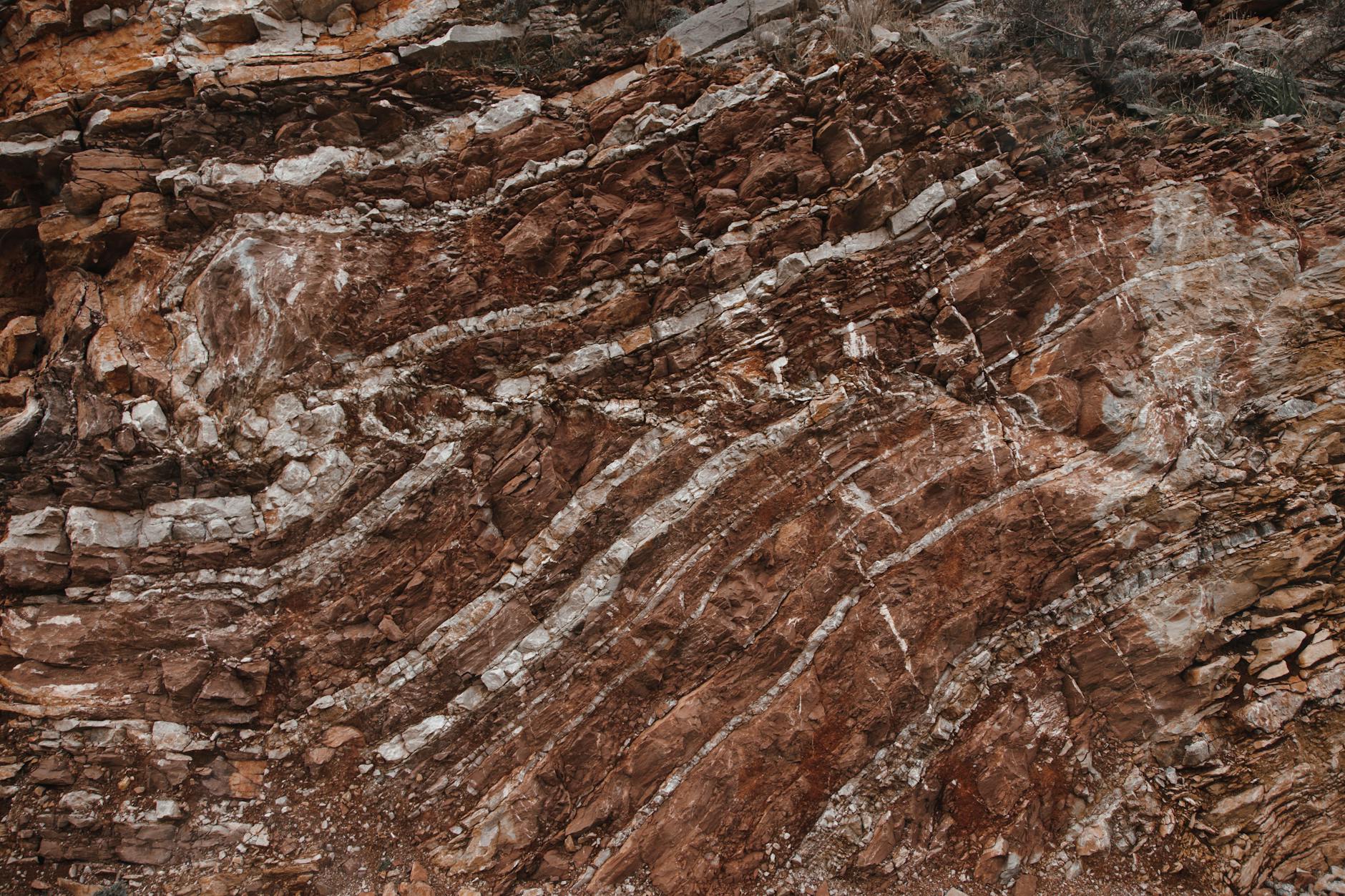
Part of the mystery at the heart of Bliss is a strange chemical compound that turns up in the bodies of the victims that land in the Orange County Morgue. At the risk of spoiling key plot points, Vasily finds himself hunting down the source for one component of the chemical. Much like my brilliant detective, I had to dust off my notes from the Geology class I took in high school in order to create a realistic location for said component, one that properly mixes science with the demands of a fictional narrative. Digging into the subject (pun intended) triggered a ton of memories from those classes, including an incredibly gifted teacher who turned rocks into rock stars. Up until that point, I’d never really considered any of the “earthly” substances around me as anything other than the stuff that things grew out of; while I was mildly interested in the sheer variety of non-living materials, honestly, they were… rocks. And soil. And mountains. And clouds. No big deal.
Oh, how they turned out to be a huge deal.

I’m almost ashamed to reveal that I didn’t truly appreciate the impressively craggy coastline of Maine until I learned how glaciers worked; my sense of time itself completely reset once I understood the millennia required to create such fantastic natural wonders as the Grand Canyon or the Big Island of Hawaii. Our single human lifetime is so brief relative to the epochs that shaped the world around us that it’s hard to accept the true multitude of changes that took place to create things like San Francisco Bay or, frankly, the shift of the continental plates into the orientation we recognize today. We’re literally brief specks on the timeline of this universe, a reality that, once understood, can truly sneak a bit of impressive perspective into your life. My geology teacher did that, and did it with panache; those lessons went far beyond the science of the world, and instead opened a wider door into more philosophical discussions that we continued a few years later in my Senior Physics class. As I look back on it now, it feels like it was as close as I would ever get to a classical Aristotle-like curriculum. College, for me, wound up being mountains of memorization, mind-numbing term papers and group projects where I felt as though I were shouldering most of the load. Good training for my career, but perhaps not as intellectually stimulating as that Geology class in high school.
There’s too much material from that class to pour into the book, of course, so I’ve had to sketch in the basics for the reader and hint at how much more Vasily might know from his own education. I also didn’t want to turn the book into an episode of NOVA, either. After all, I’m not (quite) yet a Science Fiction author and Vasily is very much a cop, not a scientist. Hopefully, the slight dusting will lend weight to what Vas discovers, and help keep the plot plausible. At least, that’s the plan; we’ll see how it goes when I get to the re-reading stage of the process.